



Is a Wheel Stand Worth It?
It is a fair question. A wheel stand is an additional cost on top of a wheel base, pedals, and a wheel you have already bought or are about to buy. If you are currently racing from a sofa with a controller, or with a wheel clamped to your desk, the idea of spending more on something to put your hardware on might feel like an unnecessary extra step.
It is not. Here is why a wheel stand is one of the most important purchases in a sim racing setup, and what you are actually giving up without one.

Starting out: the controller
Most sim racers start with a controller. It requires no setup, works from any seat, and gets you on track immediately. For casual play it is perfectly functional. But a controller has a hard ceiling. There is no force feedback, no realistic steering feel, and no way to build the kind of consistent, repeatable inputs that translate into genuine improvement lap after lap. At some point, if sim racing becomes something you take seriously, the controller stops giving you what you need.
That is the moment a wheel and pedals enters the picture. And that is also the moment the question of where and how to mount them becomes important.
The desk clamp: better than a controller, but not by as much as it should be
Clamping a wheel to a desk is the most common first step after a controller, and it is understandable. It is quick, it requires no extra equipment, and it gets your wheel and pedals in use immediately. The problem is that it introduces a set of limitations that actively work against the experience you bought a wheel and pedals to have.
Desk clamps limit how and where your wheel can be positioned. Most desks are not at the right height for a natural driving position, and a clamp gives you little room to change that. The result is a compromised seating position that affects how naturally your inputs flow and how long you can race comfortably.
Force feedback flex is a more significant issue than most people expect. When a wheel base is generating force feedback through a clamp attached to a desk, that force has to go somewhere. A desk that flexes or shifts under load absorbs feedback that should be reaching your hands as useful information. Instead of feeling the road clearly, you feel a dampened, inconsistent version of it. The more capable your wheel base, the more this matters.
Pedals on the floor move. Under hard braking, when consistent foot pressure and position matter most, pedals that slide or shift are actively working against you. There is no way to fix this with a desk clamp setup. The pedals are not connected to anything rigid.
And desk clamps are simply not suitable for direct drive wheel bases. The torque output of a direct drive system will stress a desk clamp beyond what it is designed to handle, creating a setup that is both less effective and potentially damaging to your desk and hardware.

What a wheel stand actually changes
A wheel stand solves every one of those problems in a single piece of equipment.
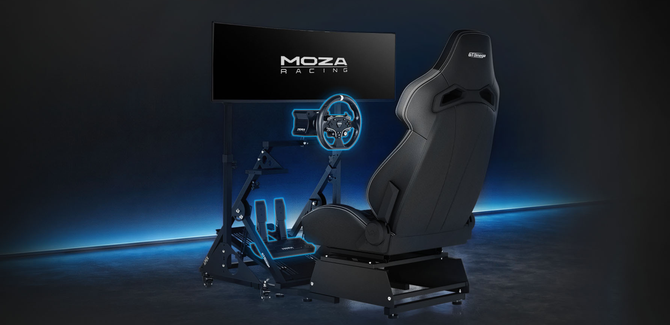
Your wheel and pedals mount together on a single rigid frame, which means they move together, stay together, and hold their position under load. The relationship between your seat, your wheel, and your pedals becomes fixed and consistent in a way that a desk clamp setup never can be. That consistency is what allows you to build repeatable inputs, develop feel for the car, and improve lap after lap rather than fighting a setup that shifts beneath you.
The wheel deck and pedal tray are both independently adjustable, so you can dial in a driving position that suits your height, your chair, and your preferred seating angle. Once it is set, it stays set. There is no re-clamping, no re-positioning, and no losing your setup between sessions.
Force feedback reaches your hands as intended. A rigid, properly rated wheel stand does not absorb or dampen force feedback the way a flexing desk does. The road detail, the kerb feel, the grip at the limit, all of it comes through clearly because the frame is doing its job and staying still under load.
Your pedals stop moving. Mounted to the stand's pedal tray with angle adjustment locked in, your pedals hold their position under hard braking. Your foot lands in the same place every time. That alone makes a noticeable difference to braking consistency within the first session.

The Chair Link: one more problem solved
There is one issue that affects both desk clamp and floor pedal setups that rarely gets mentioned until someone experiences it: chairs roll. Under heavy pedal use or sustained force feedback, an office chair will gradually shift backwards, moving your body away from the controls and undermining the consistent position you are trying to maintain.
Every GT Omega wheel stand includes a Chair Link, a simple connector that attaches your office chair directly to the stand and keeps it locked in place under load. It is a small detail that makes a disproportionate difference to how stable and planted your whole setup feels from the first lap.
The upgrade path means nothing is wasted
One concern that comes up when people consider a wheel stand is whether they are buying something they will eventually want to replace with a full cockpit. It is a reasonable thing to think about. The answer, with GT Omega, is that you are not.
Every stand in the range has a compatible rear seat frame that bolts directly on, converting the wheel stand into a full racing cockpit without replacing any hardware you have already bought. If you decide in six months or two years that you want to go further, your stand is already the foundation for that next step. Nothing is wasted and nothing needs to be sold on to fund the upgrade.
So, is it worth it?
If you own a wheel and pedals and are not using a wheel stand, you are not getting everything you paid for. The force feedback your wheel base is generating is being partially absorbed by a flexing desk or a shifting setup. Your pedals are not as consistent as they could be. Your driving position is a compromise. The hardware is capable of more than the setup is allowing it to deliver.
A wheel stand is not an accessory. It is the foundation that makes your wheel and pedals work as they are supposed to. Sim racing made simple, dependable, and set up for wherever your racing takes you next.
Take a look at the GT Omega wheel stand range and find the right starting point for your setup.


